Bracketed vs. Unbracketed vs. Slab Serif: What Designers Must Know Before Choosing a Typeface
Bracketed vs. Unbracketed vs. Slab Serif: What Designers Must Know Before Choosing a Typeface
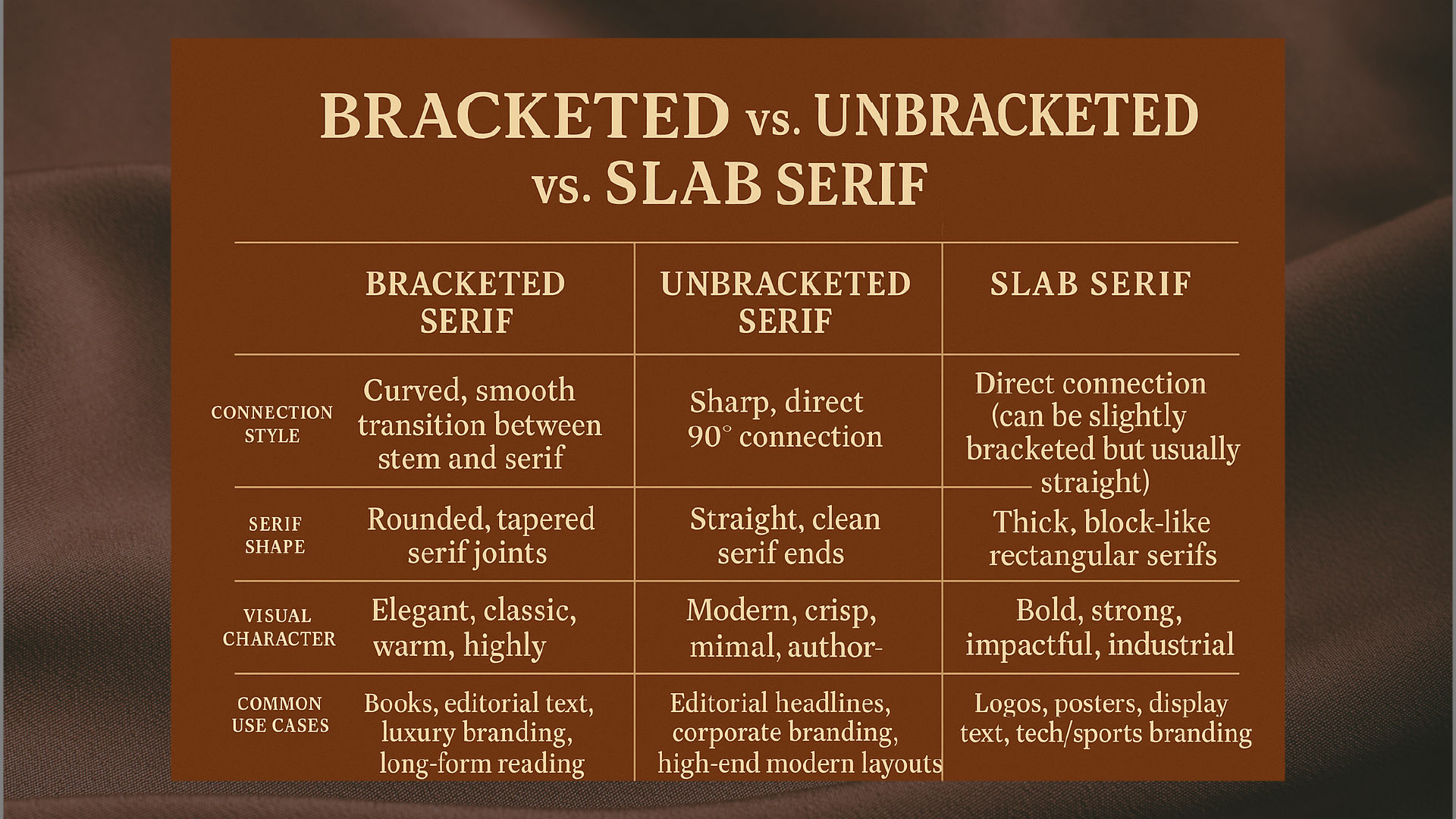
In the world of typography, serif typefaces remain timeless—trusted for their elegance, readability, and professional appeal. But not all serifs are created equal. Designers often encounter three main serif categories: bracketed, unbracketed, and slab serifs. Although they may look similar at a glance, each carries its own visual character and functional purpose. Understanding these distinctions is essential for making informed design decisions—whether you’re building a brand identity, designing editorial layouts, or creating digital interfaces.
This article breaks down the core differences between the three serif types and offers guidance on when to use each one effectively.
1. Bracketed Serif
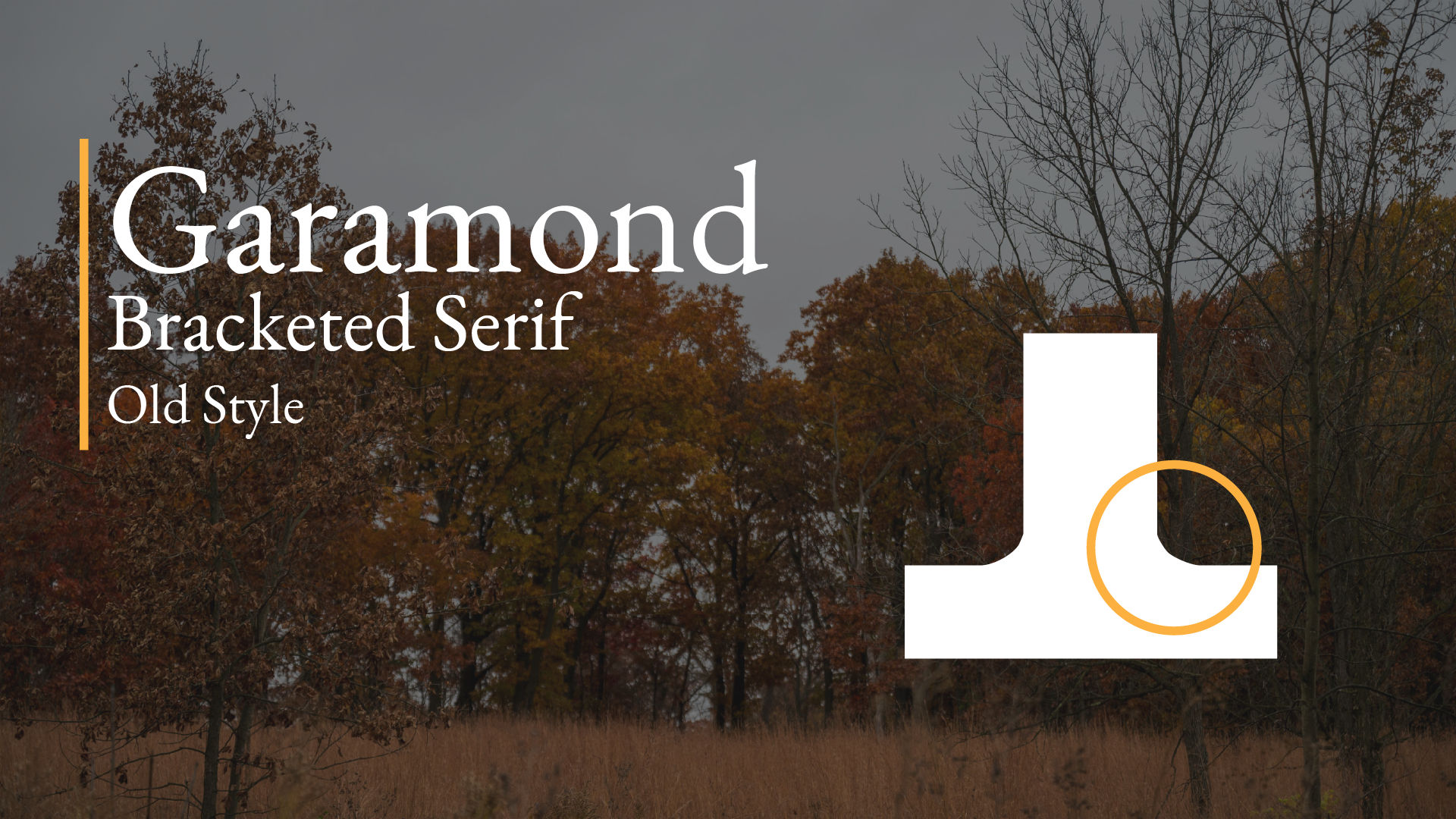
Bracketed serifs feature smooth, curved transitions between the stem of a letter and its serif. This creates a softer, more organic connection that feels traditional and refined.
Characteristics
- Gently curved links between strokes and serifs
- Classic, readable aesthetic
- More dynamic and warm appearance
- Commonly seen in old-style or transitional serif families
Best Used For
- Books and long-form reading
- Branding requiring elegance or heritage
- Luxury products, fashion, editorial designs
Why It Works
The curved transitions help guide the eye smoothly along lines of text, making bracketed serifs ideal for dense reading environments where comfort and readability matter most.
2. Unbracketed Serif
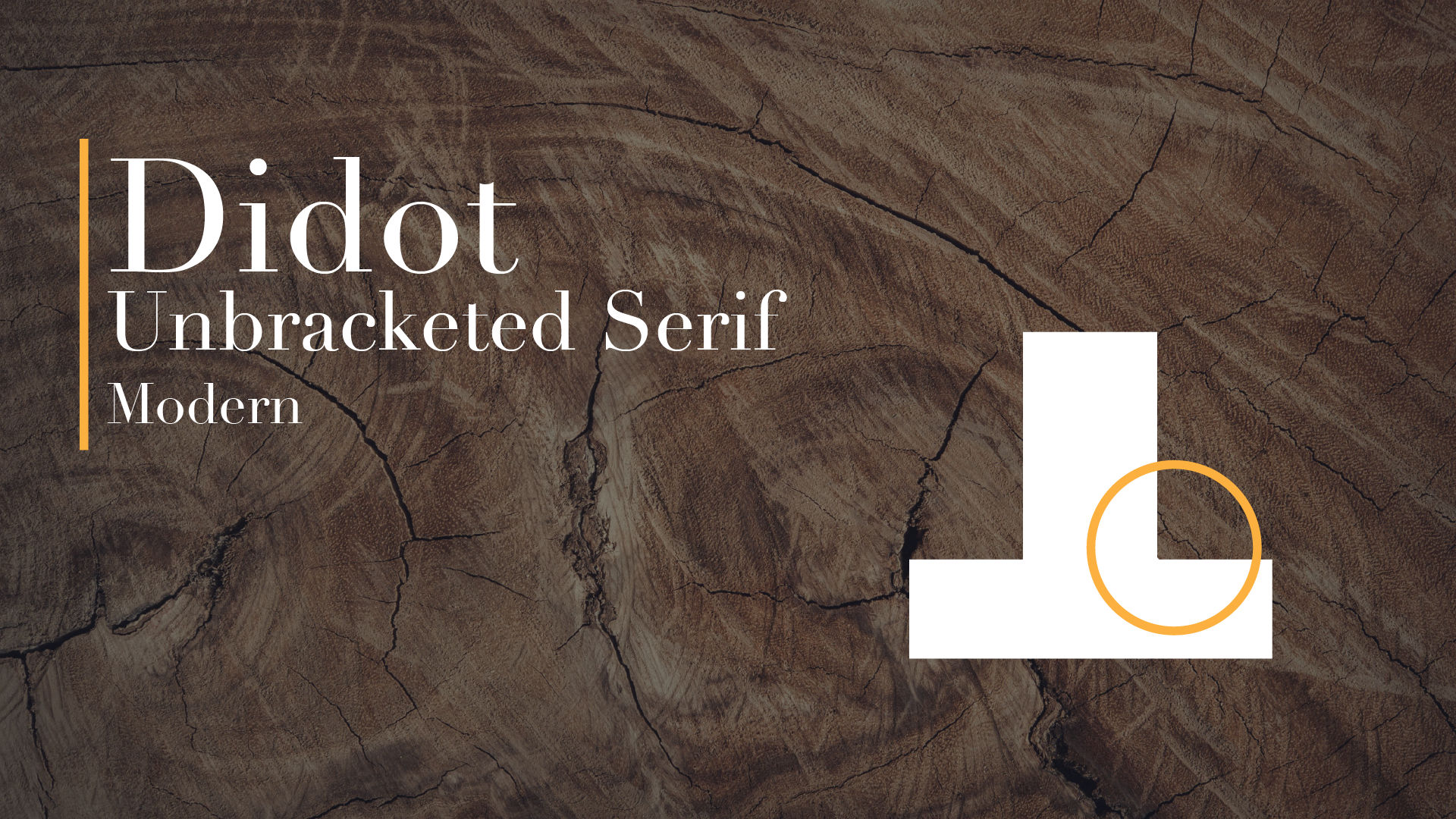
Unbracketed serifs have sharp, direct connections between the serif and stem—no curves, no transitions. This gives the typeface a more modern, crisp, and technical feel.
Characteristics
- Sharp 90-degree connections
- Clean, minimal, and often modern aesthetic
- Strong contrast between strokes
- Seen in many modern and transitional serif designs
Best Used For
- Corporate branding
- Editorial headings
- Websites needing a contemporary but classic touch
Why It Works
The clean joints produce a more structured, authoritative look—making unbracketed serifs suitable for high-end editorial and modern professional branding.
3. Slab Serif
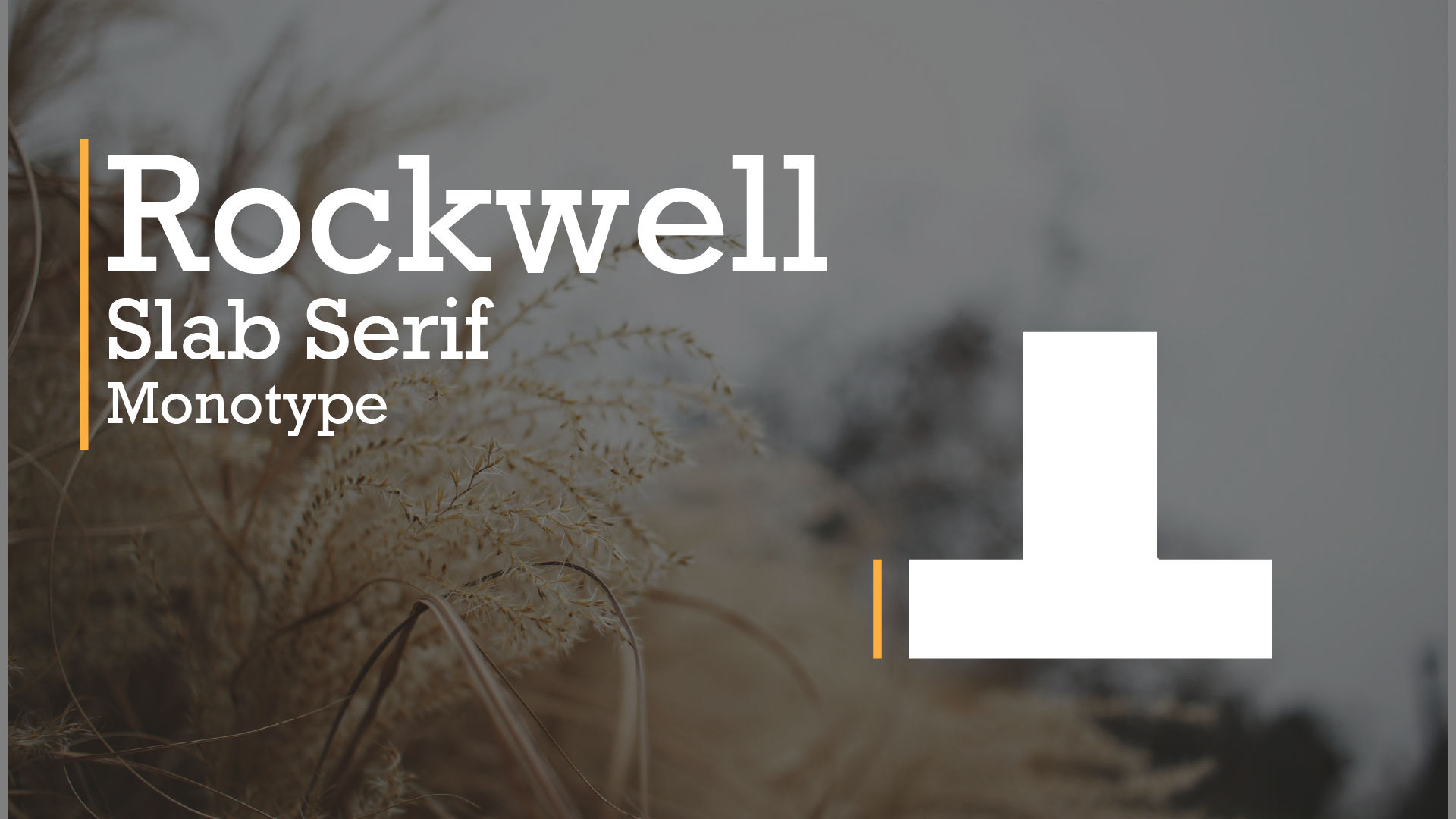
Slab serifs are defined by their thick, block-like serifs, often with minimal contrast between strokes. They appear bold, sturdy, and impactful.
Characteristics
- Heavy, rectangular serifs
- Low to moderate contrast
- Highly legible even at large sizes
- Often geometric or industrial in style
Best Used For
- Logos and branding needing strength
- Posters, headlines, and display typography
- Tech, sports, or industrial-themed design
Why It Works
Slab serifs project confidence and power. Their bold structure makes them ideal for designs requiring maximum visual impact and high legibility from a distance.
Key Differences at a Glance