
Seeing the Whole Picture: Understanding Gestalt Principles in Graphic Design
Seeing the Whole Picture: Understanding Gestalt Principles in Graphic Design
Have you ever looked at a design and instantly understood its message—without even realizing why? That’s the power of Gestalt principles. Rooted in psychology, these principles explain how our brains naturally organize visual information into patterns and meaningful wholes. For designers, understanding Gestalt theory isn’t just helpful—it’s essential. It allows you to create visuals that feel intuitive, balanced, and engaging.
1. What Are Gestalt Principles?
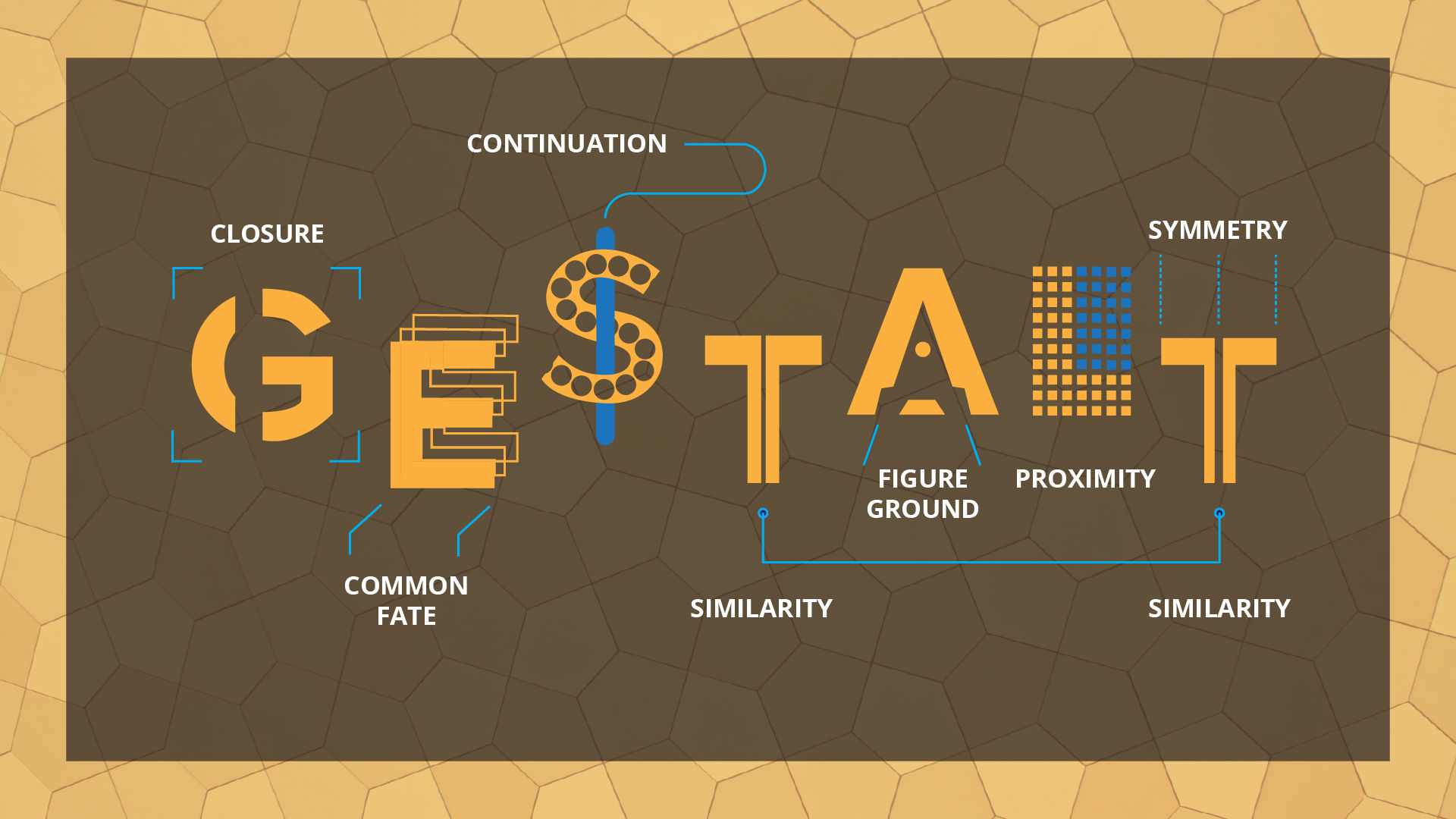
The term “Gestalt” comes from German, meaning “shape” or “form.” Gestalt psychology suggests that people perceive entire patterns or configurations, not just individual components. In other words, the whole is greater than the sum of its parts.
In graphic design, Gestalt principles guide how viewers interpret and interact with visual elements. They help ensure that layouts are not only visually pleasing but also communicative and easy to understand.
2. The Core Gestalt Principles in Design
a. Proximity
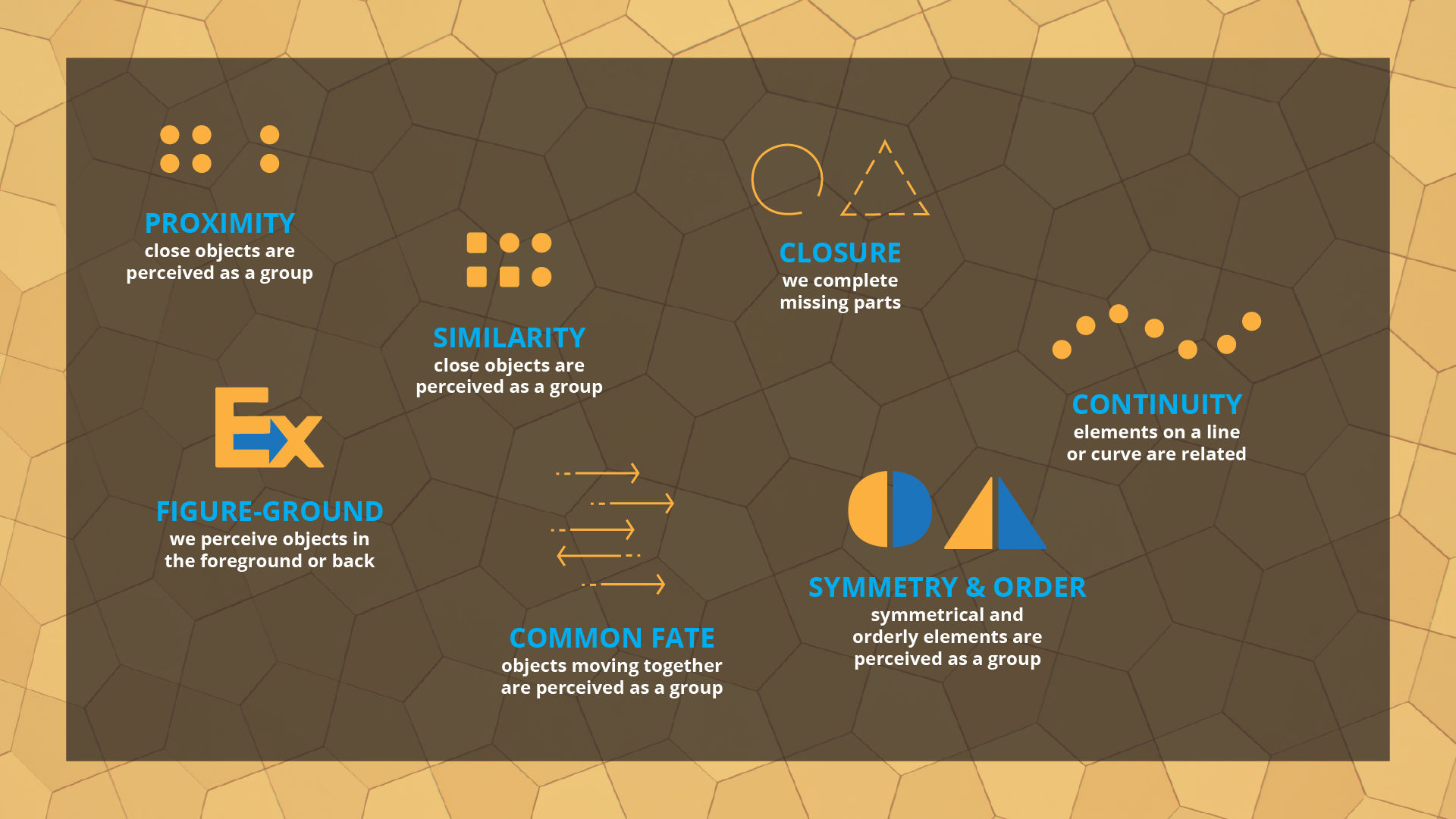
Elements placed close together are perceived as belonging to the same group. Designers use proximity to organize content and create relationships between objects. For example, grouping related icons or text blocks helps users navigate information more intuitively.
b. Similarity
Objects that share visual characteristics—such as color, shape, or size—are seen as related. Consistent typography, color palettes, or button styles in a website layout use similarity to create unity and hierarchy.
c. Continuation
Our eyes naturally follow lines, curves, and paths. Designers use continuation to guide viewers smoothly through a composition, like leading the eye from a logo to a call-to-action button on a webpage.
d. Closure
When we see incomplete shapes, our brains fill in the gaps. This principle adds sophistication and intrigue to logos and icons—think of the WWF panda or IBM’s striped logo. Closure invites viewers to participate mentally, making the design more memorable.
e. Figure-Ground
This principle defines how we separate objects (figure) from their background (ground). A well-balanced figure-ground relationship helps focus attention and prevents visual confusion. For instance, using contrast or whitespace ensures that key messages stand out clearly.
f. Symmetry and Order
Humans are drawn to balance. Symmetrical layouts convey stability and calm, while asymmetry can create dynamic movement. Both rely on the viewer’s sense of visual order to feel complete.
3. Why Gestalt Principles Matter in Modern Design
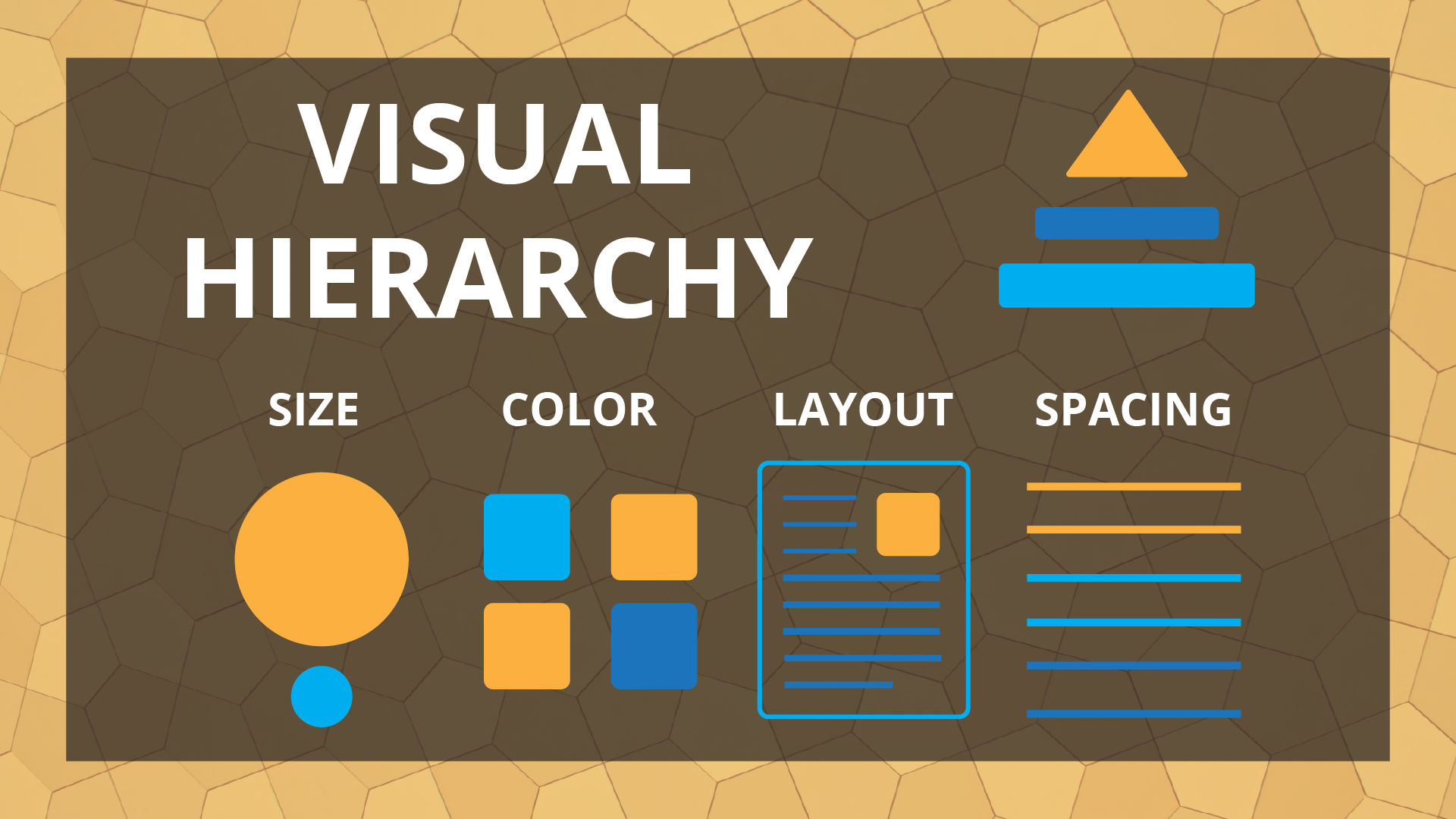
In today’s fast-paced visual world, clarity is key. Gestalt principles help designers:
- Create visual hierarchy and focus points
- Ensure coherence across branding and layouts
- Improve user experience (UX) through intuitive navigation
- Communicate emotion and intent through composition
Whether you’re designing a logo, website, or social media post, these principles transform abstract ideas into cohesive, impactful visuals.
4. Applying Gestalt Principles Effectively

To make the most of Gestalt theory in your projects:
- Use whitespace strategically to separate or connect elements.
- Maintain consistent styles for unity.
- Experiment with balance to find visual harmony.
- Simplify your layout—the mind loves clarity.
Remember, the goal isn’t to show everything—it’s to show what matters most, beautifully.
Conclusion
Gestalt principles remind us that great design isn’t just about color or typography—it’s about how people perceive and feel when they see your work. By mastering these psychological rules of perception, designers can craft visuals that not only look good but also speak directly to the human brain.
In short: design smarter, not louder.